
You can recognize an unedited AI social post from across the room. "Exciting news! We're thrilled to announce..." followed by an emoji, a list of three benefits, and a question nobody will answer. The text is grammatical, inoffensive, and completely interchangeable with ten thousand other posts published the same hour.
This is the actual risk of putting AI into your content workflow. Not that it writes badly, but that it writes like nobody in particular, and a brand that sounds like nobody might as well not post. I let AI draft a large share of my own content now, and the thing that made that workable was not a better model. It was giving the model a fixed, written definition of how the brand talks, and wiring it into every draft. Here is the workflow, including the parts that still annoy me.
What a brand voice is, concretely
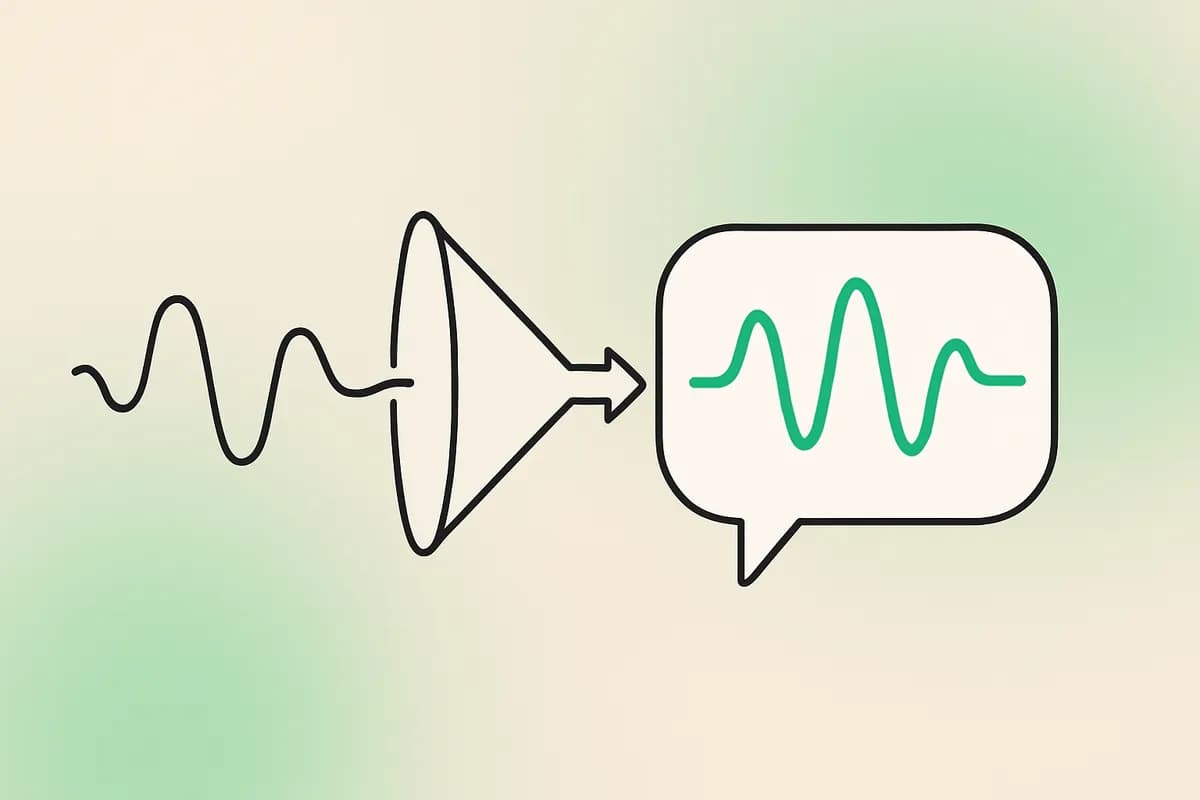
In Planpost, a brand voice is a stored profile: tone rules, vocabulary you use, words and phrases you ban, formatting habits, and example posts that show the voice rather than describe it. When anything drafts content for that brand, whether the built-in AI or an outside agent, the profile is compiled into the prompt. Every draft starts from your rules instead of the model's defaults.
That mechanism matters more than it sounds. The generic AI voice is not a bug in the model, it is the default the model falls back to when nobody tells it otherwise. A voice profile replaces the default. It does not make the model creative, and it will not give it taste. What it does is move the starting point from "average of the internet" to "average of your best posts", and that difference is most of the battle.
Writing a profile that actually works
My first attempt was a paragraph of adjectives. "Friendly but professional, confident, approachable, a little witty." Useless. Every brand on earth describes itself that way, so the model learned nothing, and the drafts came back in the same beige voice as before.
What worked was treating the profile like evidence rather than aspiration:
The extraction step is where the value is. Read your best posts and write down what they have in common as enforceable rules. Not "we are conversational" but "first sentence is never longer than twelve words" and "we say customers, never users" and "no exclamation marks in the first line." Rules a model can follow and a reviewer can check.
The banned list does more work than anything else in my profile. Mine bans "excited to announce", "game-changer", "unlock", "elevate", em dashes, and emojis in the first sentence, among a couple dozen others. Every entry on the list came from a real draft that made me wince. That is the maintenance loop in one sentence: when a draft misses, do not just fix the draft, add the rule that would have prevented it.
The example posts are the last piece, and they carry more weight than the rules do. Models imitate better than they obey. Ten strong examples pull a draft toward your voice more reliably than twenty instructions, so when you have to choose where to spend effort, spend it picking examples.
To make the difference tangible, here is the same feature announcement drafted twice. Without a profile: "Exciting news! We just launched approval workflows to streamline your content process. Say goodbye to messy email threads!" With my profile applied: "Client approvals used to live in email threads with subject lines like Re: Re: Re: final FINAL. We built a fix. Your client gets a link, taps approve, and never creates an account." Same facts, same length. One of them could belong to any company on the internet. The other could survive in my feed without me touching it, which is the entire test.
The workflow in practice
Day to day, this runs through an agent. I described the general setup in scheduling social media from an AI agent, so the short version: Claude connects to Planpost over MCP and can create, schedule, and publish posts through the agent integration. The part that matters for this post is that the voice profile travels with those tools. The agent fetches the brand voice prompt for whichever brand it is drafting for, so the same brief produces different copy for different brands, each starting from its own rules.
In a multi-brand setup this is the difference between a tool and a liability. An agency drafting for a playful snack brand and a buttoned-up law firm in the same session cannot rely on remembering to paste the right style guide into the chat every time. The profile is attached to the brand, so the drafts cannot silently fall back to the model's defaults because someone forgot a step. The failure mode is removed rather than discouraged.
My review pass on a voice-profiled draft is usually under a minute per post. Before the profile existed, review meant rewriting, which quietly erased most of the time the AI was supposed to save. That is the honest economics of the feature: it does not remove the human from the loop, it changes the human's job from writer back to editor.
What it does not fix
A voice profile will not make the model funny, and it will not tell it what is worth saying. The judgment about which post to write, and the occasional strange angle that turns out to be the best post of the month, still come from a person. I still read every draft before it publishes and I do not expect that to change.
Voices also drift. The profile you write in January describes January. By April the product has moved, you have new opinions, and drafts start feeling slightly off in a way that is hard to name. The fix is unglamorous: I reread my profile roughly monthly, retire stale examples, and add whatever new banned phrases the intervening weeks produced. Fifteen minutes, and it keeps the profile describing the brand you are rather than the brand you were.
Plan availability
Brand voice is a Pro feature on Planpost. It is not in the Creator plan, and I would rather say that plainly than have you find out at the paywall. There is a 7 day free trial with full Pro limits if you want to test a profile against your own posts before paying anything. Details on pricing.
If you take one thing from this, take the method, which works with or without my product: define your voice as enforceable rules and real examples, put that definition somewhere every draft must pass through, and grow the banned list every time a draft makes you wince. The tools will keep changing. A written record of how your brand talks compounds either way.